Anúncios
Want simple, tasty ways to blend dishes from different places? You’re in the right place. This guide shows how fusion cuisine can be intentional and respectful, not random.
Fusion food has moved from trendy menus into everyday life in the United States. Cities, markets, and households now mix ingredients and techniques as neighbors share flavors from around the world.
You’ll get a clear roadmap so your meals taste cohesive. Learn what balanced fusion cooking looks like in real life: keep one familiar base and borrow a few elements for contrast and depth.
This guide sets expectations up front. Blends can be global—like Korean + Mexican—or local, such as regional U.S. mashups. Both work when the mix is purposeful and flavor-led.
Follow practical steps here: definitions, a simple non-forced formula, pantry picks, and tweakable examples you can use on weeknights.
Anúncios
What fusion cuisine really is and why it works so well in the United States
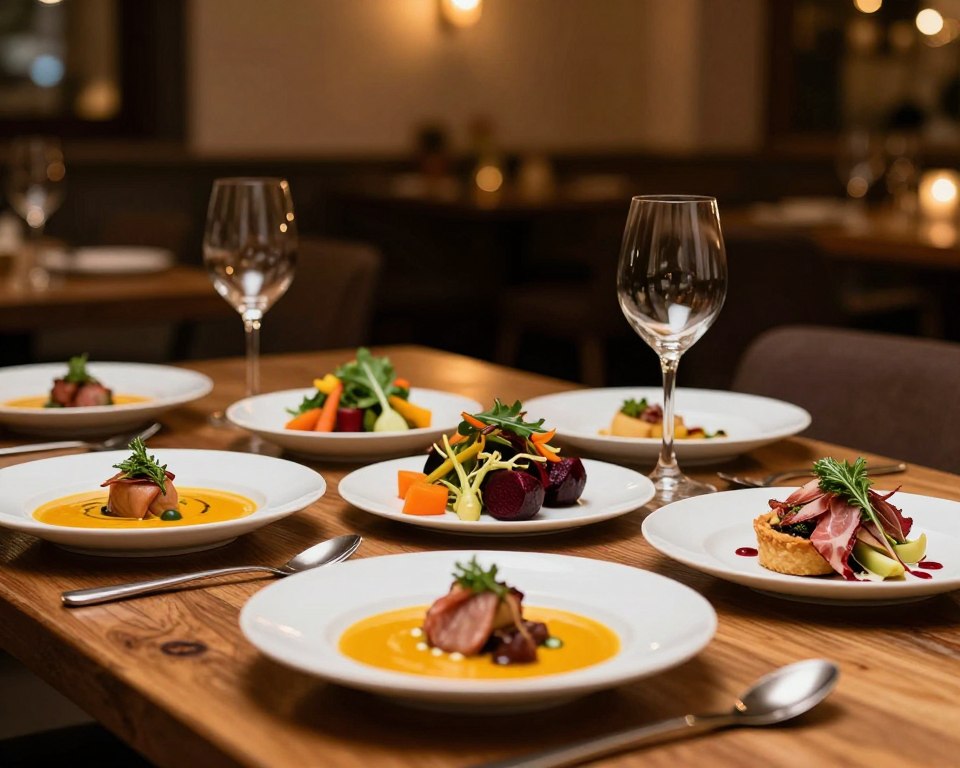
Think of fusion as a thoughtful pairing of flavors and methods that creates one unified dish. It’s not two plates on one tray. It’s a deliberate blend of ingredients, techniques, and culinary traditions that reads as a single idea on the plate.
In the U.S., fusion moved from a late-20th-century trend into everyday life. Immigrant neighborhoods, global markets, and adventurous chefs like Wolfgang Puck and Nobu Matsuhisa helped normalize mixing methods and flavors.
Intentional blends, not random pairings
Good fusion keeps one clear base and borrows one or two elements. For example, keep a familiar vessel and add a spice profile or a sauce from another tradition. Ask what each ingredient adds—texture, heat, or acidity.
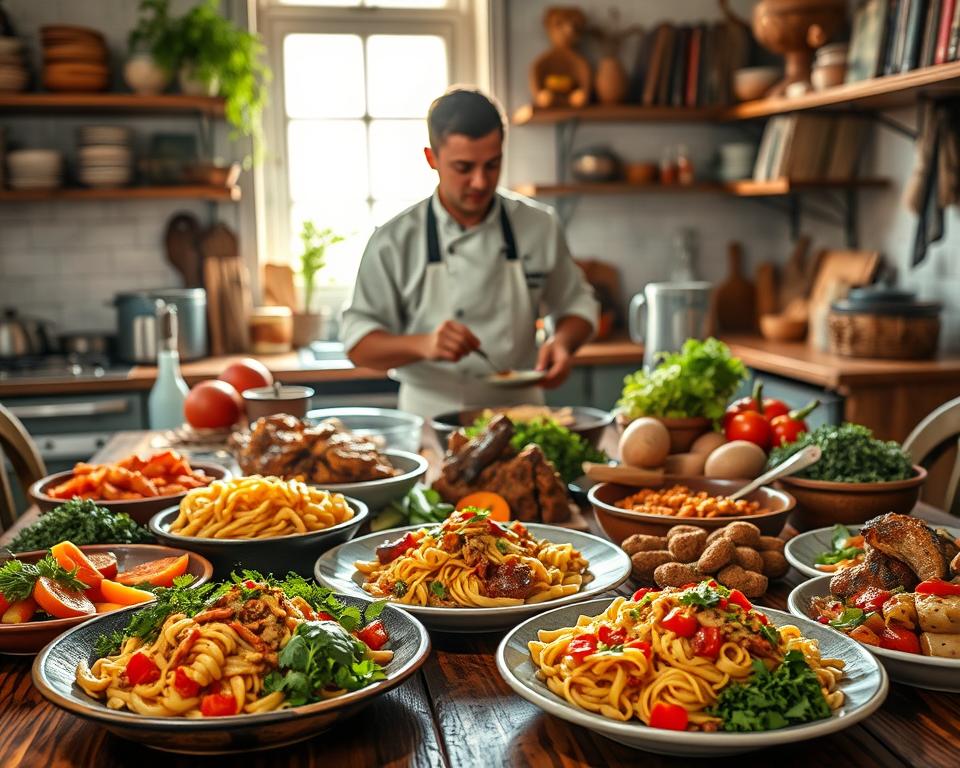
From restaurants to your kitchen
In cities you already see regional mashups: East Coast seafood meets West Coast citrus; South American staples meet Mediterranean herbs. These examples show how traditions merge without feeling forced.
“Fusion is about purpose: choose what helps the dish tell a single, honest story.”
- Define a lead flavor.
- Borrow one technique at a time.
- Evaluate whether new elements support the whole.
The non-forced formula: start with familiar dishes and a clear “why”
Start with a dish you already enjoy and give it a single, purposeful twist. That keeps the original identity intact and prevents the result from feeling random.
Pick a base dish and protect its identity
Choose a recipe you know well. Keep the main structure so people still recognize the dish. Protect the texture and core flavors that make it work.
Add one or two cultural elements at a time
Introduce a sauce, a spice blend, or a simple technique—not all three. This rule helps you maintain balance and prevents flavors from competing.
Ask what each new ingredient contributes
Use a quick checklist: does the ingredient improve taste, texture, aroma, or speed? If not, skip it.
- Decision filter: scale back anything that muddies the plate.
- Small tests: try tiny batches so experimentation costs less time and food.
- One-sentence why: describe the dish in one line to keep focus.
“Add only what earns its place.”
Balanced fusion cooking fundamentals: flavor profiles, texture, and harmony
First, scan the five tastes on your plate; that quick map keeps flavors from fighting. Before you pair cuisines, list sweet, salty, sour, bitter, and umami and note which tradition leads on each axis.
Map the five tastes so you can predict fit
Mark where each cuisine lands. If both rely on bold umami and salt, expect competition. If one brings acidity and the other brings cream, they likely complement.
Design contrast on purpose
Use texture and temperature to add structure: creamy vs. crunchy, hot vs. cold, bright vs. rich. Contrast makes each bite feel intentional.
One lead, one support
Pick a lead flavor profile and a supporting profile. That framework prevents flavor competition and keeps the dish readable.
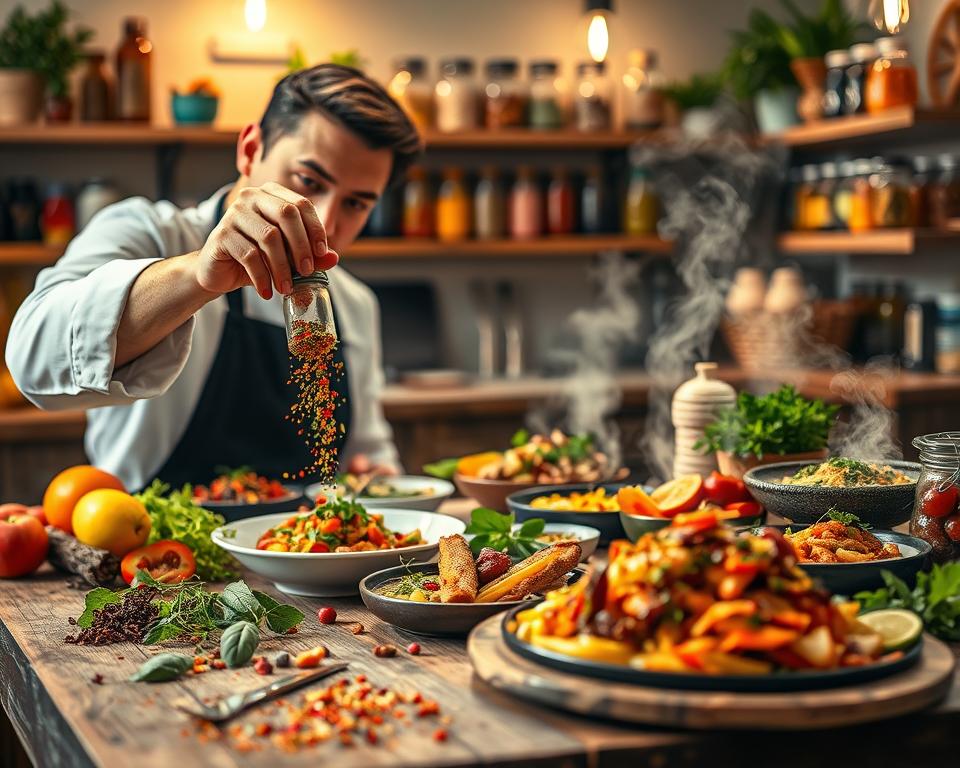
Use spices and a light sauce to bridge traditions
Choose signature spices and a single bridging sauce. Use them sparingly so the base identity stays clear.
“If the final bite doesn’t feel cohesive, tweak one axis—acid, heat, or fat—until the flavors align.”
| Thing to Check | Quick Fix | When to Use |
|---|---|---|
| Too salty/umami | Add acid or fresh herbs | When both traditions are savory-forward |
| Too hot | Balance with a touch of sweetness or cream | Spice overwhelms other elements |
| Flat flavor | Boost with toasted spices or finishing oil | Dish needs lift at the end |
Choose your fusion lane: ingredient fusion, technique fusion, and style fusion
Start by choosing a single lane: work with ingredients, adopt a new technique, or focus on presentation. That keeps your dish readable and lets you test ideas without overwhelming the plate.
Ingredient fusion
Integrate, don’t just place foods side by side. Build a sauce, filling, or dough that blends ingredients and honors both culinary traditions.
Example: mix a chile-lime marinade into a classic braising liquid to unify flavors.
Technique fusion
Apply one method from another cuisine to familiar ingredients. Try tempura-style frying for root vegetables you’d normally roast.
Using wok techniques on Mediterranean vegetables is another way to reuse cooking methods and get fresh textures.
Style fusion
Let plating hint at two worlds. Pair Japanese minimalist layout with vibrant Mexican garnishes so the plate reads as one idea.
Visual balance matters
Match color and texture to the flavor story. Add crunchy toppings for height and contrast to keep different cultures clear on the plate.
| Lane | What to Change | When to Use |
|---|---|---|
| Ingredient fusion | Combine sauces, fillings, marinades | When flavors can be blended into one element |
| Technique fusion | Swap a method: tempura, wok, slow-roast | To add new texture using existing ingredients |
| Style fusion | Plating, garnishes, color palette | When presentation can tell the story |
Stock a fusion-ready kitchen with versatile ingredients and smart swaps
Start with a short, flexible shopping list so your kitchen can shift between cuisines without specialty clutter. Keep items that layer flavor fast and travel well across recipes.
Soy sauce and other quick umami boosters
Soy sauce is a fast way to deepen savory notes. Use soy in marinades, braises, and pan sauces to add depth without long reductions.
Other umami boosters: fish sauce, miso paste, and anchovy paste work in small amounts to enrich stews or dressings.
Coconut milk, citrus, and chili for broad range
Coconut milk replaces cream for a lighter finish and a different texture. Citrus—lime, lemon, orange—brings lift. Chili peppers add heat or smokiness.
Together they let you move from rich to bright in one weeknight way.
Herbs, spice blends, and natural swaps
Keep parsley, cilantro, and basil, plus a few blends like garam masala or smoked paprika. Try lemongrass instead of lemon zest or coconut milk in place of cream.
Start small and taste. Let one sauce or spice lead while others support the dish.
“Build your pantry around a few multipurpose ingredients; they’ll take you across different cultures without the clutter.”
| Pantry Item | Primary Use | Smart Swap |
|---|---|---|
| Soy sauce | Umami in marinades, braises, pan sauce | Tamari for gluten-free |
| Coconut milk | Richness for curries, soups, desserts | Heavy cream for a dairy swap |
| Citrus | Acid to brighten and balance | Lemongrass for aromatic zest |
| Chili peppers | Heat and smoke control | Smoked paprika for mild warmth |
| Herbs & spices | Layered aroma and freshness | Versatile blends to simplify seasoning |
For a quick starter list and regional tips, check this guide to essential Korean ingredients and adapt items to your pantry.
How to create your own fusion dishes step by step (without overcomplicating it)
Start with a simple frame you trust, then add one clear twist at a time. This keeps your plate readable and makes experimentation low-risk.
Pick a vessel that welcomes a remix: tacos, dumplings, pizza, or sandwiches. These formats let you swap fillings, sauces, and toppings without changing the whole dish.
Use seasoning blends to connect traditions
Choose one spice mix to act as a bridge. A single blend keeps flavors coherent and prevents a muddy result.
Test in small batches and adjust
Make tiny trials to save time and reduce waste. Then tweak salt, acid, heat, and sweetness until the plate sings.
Layer texture and finish with intent
Add crispy toppings, fresh herbs, or a bright sauce at the end. Texture gives contrast and makes each bite interesting.
Tell a clear story on the plate
Summarize your idea in one sentence: what you mixed and why. Let that line guide presentation and portioning so the dish reads as one idea.
- Repeatable workflow: vessel → one bridge spice → test → adjust → finish.
- Practical wins: less waste, faster recipes, more confidence to experiment.
| Step | Action | Quick Tip |
|---|---|---|
| Choose vessel | Tacos, dumplings, pizza, sandwich | Pick what you already make well |
| Bridge flavor | One seasoning blend or sauce | Use sparingly to avoid muddiness |
| Test & adjust | Small batches; tweak salt/acid/heat/sweet | Save time and scale up when ready |
| Finish | Crispy topping, herb, bright sauce | Add texture last for best contrast |
“Start simple, test small, and let one idea lead the plate.”
Fusion food ideas inspired by real-world combinations (and how to rebalance them)
Look to popular mashups to see which combinations actually work in restaurants and homes. These examples show how you can borrow from other cultures while keeping one clear lead flavor and a readable story on the plate.
Asian–Mexican favorites
Try bulgogi tacos, ramen burgers, or kimchi tacos. Each uses a single bold protein or condiment as the lead and adds contrast with acid and crunch.
Italian–Mexican comfort mashups
Taco pizza and lasagna with ricotta, black beans, and corn make sense because they reuse familiar textures. Keep the cheese and tomato notes, then add cumin or chili for brightness.
Caribbean–Thai bridge
Jerk-seasoned skewers finished with satay-style sauce (peanut butter, coconut milk, soy sauce) and a splash of pineapple juice give sweet-tart balance.
South America meets the Mediterranean
Fold feta into arepa dough, serve with a tabbouleh-style bulgur salad of parsley, tomato, cucumber, olives, and mint. Let herbs and acid guide the plate.
Hot pot, reinvented
Keep the Korean communal format but swap the broth to a West Indian stock—scotch bonnet, coconut, lime, and allspice—then finish with mango and plantain chips.
Quick balance fixes for bold flavors
- Add acid: lime, vinegar, or pineapple juice to cut richness.
- Use fresh herbs: cilantro or mint to lift heavy spice.
- Split or dilute sauces: serve a concentrated sauce on the side so it supports without overwhelming.
“Let one clear element lead; use small supporting touches from other traditions so the dish reads as one idea.”
Conclusion
Wrap up your experiments by keeping one clear idea on the plate and one small change that earns its place.
Fusion cuisine works when you start with a dish you know, add a single intentional element, and test quickly. Use vessels you already trust—tacos, bowls, pizzas—and pantry staples to make changes easy and repeatable.
Follow your non-forced checklist: one lead flavor, one bridge ingredient, and a final tweak for texture or acid. That approach builds weeknight recipes you’ll make again.
Respect origins, stay curious, and learn from how chefs create memorable dishes. For inspiration on blending tradition with innovation, see this guide: the art of fusion cuisine.