Anúncios
You’ll get a clear overview of how simple devices and smarter packaging link your kitchen to the broader supply chain. One-third of all food produced was wasted in the past, and a large share happened at home because labels and dates were misunderstood.
Temperature matters. Between 40°F and 140°F bacteria can double every 20 minutes, and a 1°C rise can cut shelf life for bagged lettuce by about 10%. Small handling changes can cut spoilage and reduce waste.
Modern sensors, QR-enabled packaging, and better monitoring turn static dates into live data. That gives you clear, eye-readable signals about quality and safety so you can plan meals and avoid tossing good products.
By the end of this article, you’ll understand how temperature, time, and simple storage steps help keep more food safe and useful. You’ll also see how supply chain information reaches your phone to make meal prep easier and smarter.
Fresh funding and real deployments put real-time freshness sensors in your hands
New investment and rollouts are putting unit-level indicators into the hands of shoppers and retailers. Evigence closed an $18M Series B after a $10M Series A and is scaling its Freshness Management System across the U.S. and Europe.
Anúncios
The system pairs disposable sensors with analytics so providers, brands, and consumers can scan eye-readable tags and get unit-level data on time-temperature exposure. That digitized record complements dates and improves product safety during storage and transit.
How the Freshness Management System works
The sensor logs exposure and turns that into simple visual cues and scannable data as the item moves through the supply chain. Scans at each stop create a traceable history you can use when unpacking meal kits or checking shelf items.
Measured impact
Evigence reports tens of millions of sensors in use and results that matter: ~20% longer shelf life, a 5% increase in sell-through, and a 33% reduction in waste. Small temperature shifts—just 1°C—can cut lettuce life by ~10%, so this level of monitoring is practical.
“Real-time unit data helps turn vague dates into actionable signals for consumers and retailers.”
Given the roughly $32B lost to date-code misunderstandings and rapid bacterial growth in the danger zone, this solution gives you clearer information and better confidence in your purchases.
The state of food freshness tech: smart packaging, sensors, and data you can trust
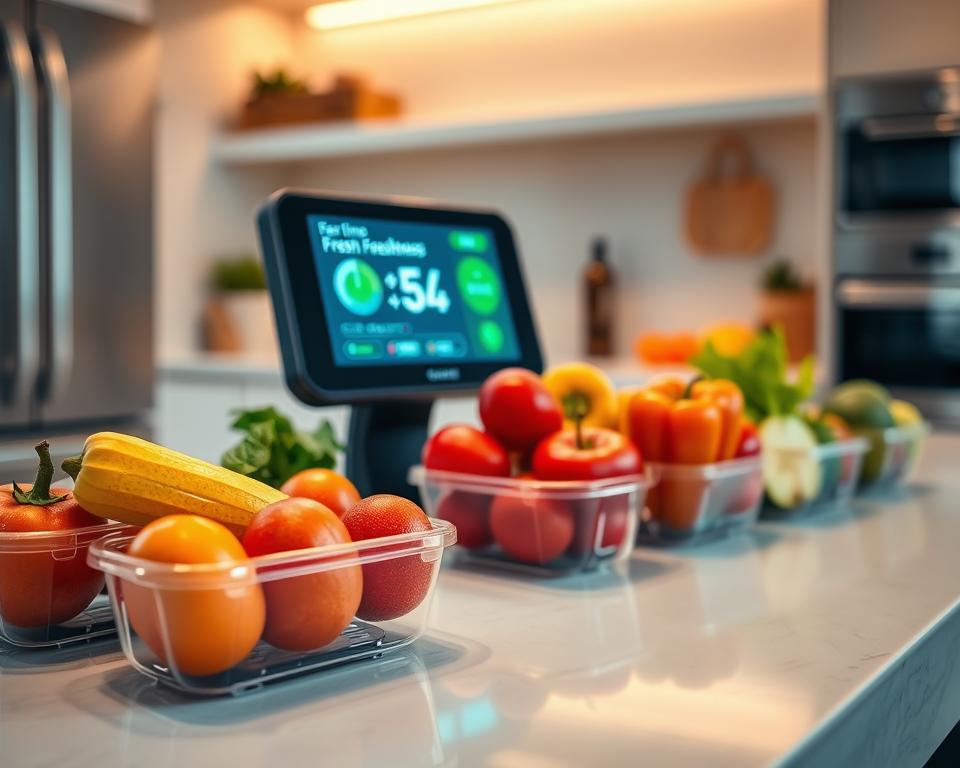
A new layer of intelligent packaging turns invisible spoilage chemistry into information you can read at a glance. These systems combine time-temperature indicators, oxygen and CO2 monitors, and color-changing dyes to flag when a product leaves safe conditions.
Active packaging that signals change
Time-temperature strips and oxygen indicators show cumulative exposure so you see true shelf life, not just a stamped date. pH and colorimetric dyes reveal volatile compounds like ammonia, DMA, and TMA, translating complex chemistry into simple visual cues.
Biosensors paired with RFID for real-time tracking
Biosensors that detect metabolites and microbial markers can be combined with RFID to log temperature and humidity histories. That real time record helps retailers and consumers act before quality drops.
MAP, optical CO2, and inline rejection
In modified-atmosphere packing, oxygen and CO2 sensing preserves color and slows spoilage organisms. Optical sensors printed into packs — used by companies like Senoptica — let stores scan and remove out-of-spec products from the shelf.
Blockchain for verified, farm-to-fridge data
Blockchain can attach a digital identity to a product, recording handoffs and measured conditions. A quick QR scan gives you verified data about production, storage, and handling so you make smarter buys.
“Transparent, verified data helps retailers keep better stock and gives you confidence when you buy.”
- Result: longer shelf life and clearer quality signals.
- Impact: fewer surprises at home and a real way to reduce food waste across supply chains.
New lab-to-fridge breakthrough: a smartphone-synced visual-olfactory sensor for spoilage in seconds
Researchers built a compact visual-olfactory system that turns trace compounds from spoiling food into a clear color change you can read with your phone. The core is a hydrogen-bonded organic framework enhanced with europium and embedded in a porous gel.
The gel reacts in under six seconds, detecting biogenic amines linked to early spoilage in chicken and prawns. The smartphone app analyzes the color shift and gives a numeric freshness score so you can decide how to use a product or portion.
Colorimetric gel detects biogenic amines fast: on-site freshness reads in under six seconds
The sensor reports ultrafast responses and high sensitivity. It identifies volatile compounds that signal spoilage and translates them into easy information for consumers.
From prototype to your kitchen: stability, recyclability, and the path to safer, longer-lasting foods
Designed to remain stable across varied temperature and humidity, the gel is recyclable and built for repeated use. That lowers added waste while adding practical access at the package or in your fridge.
- Benefit: rapid, phone-quantified readings that help reduce waste and protect safety.
- Future: integration with antimicrobial or dehumidifying features could extend shelf life and improve product quality.
“A sensor that senses and helps preserve could reshape how you manage fresh produce and proteins.”
Conclusion
Today’s monitoring tools give you instant, usable signals so you waste less and buy with more confidence. Practical pilots showed a ~20% longer shelf life and a 33% drop in waste when sensors and smart packaging were used.
You’ll leave knowing simple steps: scan signals, trust a sensor over an unclear date, and plan storage to keep products safer. Clear handling history and better temp visibility cut risks tied to the 40°F–140°F danger zone and the roughly $32 billion lost to misread dates each year.
Act on one habit: choose items with visible indicators, ask retailers for more info, and use a quick checklist when a package flags a concern. Learn more from the research on verified handling and impact at clear handling studies.