Anúncios
Can one delivery route change how your restaurant or brand affects the planet? This question sits at the heart of a shift in the culinary world.
You face daily choices about ingredients and packaging that ripple across the globe. Smarter logistics can cut your carbon footprint, save energy, and keep items fresher for guests.
Yes, greener methods often mean an upfront investment. But you can gain long-term savings, stronger customer trust, and smoother operations when routes and storage are optimized.
In this article, you’ll get a clear view of the industry impact and the practical way your team can act. Expect real-world examples, data, and steps you can use now to reduce waste and meet rising demand for transparency.
Read on to learn how small changes in logistics and supplier choices can protect the planet while boosting your bottom line.
Anúncios
Why Food Shipping’s Environmental Impact Matters Right Now
Long supply chains quietly stack emissions and energy use into a big climate problem. You can trace most of the footprint to three clear sources: transport fuel, cold storage, and packaging that travels long distances.
From greenhouse gas emissions to energy use: where the footprint comes from
Vehicles and vessels burn heavy fuels that raise emissions and local toxins. Over long routes, those tailpipe and bunker fuels add up quickly and push overall impact higher.
Cold chains, refrigeration, and the hidden climate costs
Refrigeration and cold-chain operations are a major driver of greenhouse gas emissions. Energy use and refrigerant leaks are estimated to cause about 2–4% of global greenhouse gas emissions.
Consumer demand in the United States for transparent, eco-friendly delivery
U.S. consumers want clearer answers. In a survey of 7,000 people, 56% asked restaurants to explain how takeout and deliveries are greener. Many also prefer less excess packaging and expect accurate orders to cut waste.
- Main hotspots: transport fuel, cold storage, and last-mile errors.
- Quick wins: better routing, efficient refrigeration, and clearer packaging choices.
- Why act now: consumers reward transparency and you reduce costs while lowering your climate impact.
Food Shipping Sustainability: What It Means for You and the Planet
Small operational shifts in how you move products can deliver big gains in freshness and emissions. Cleaner logistics reduce time in transit, cut spoilage, and protect the quality of your ingredients.
Business benefits: Upfront upgrades may cost more, but you often recover those dollars through lower energy bills, better load consolidation, and smarter routing. That improves margins and reduces waste.
Climate and trust: Lowering your carbon footprint signals real environmental stewardship. Customers reward transparency, and companies that lead gain loyalty and repeat business.
The practical way forward
- Focus first on routing and temperature control to protect quality and cut emissions.
- Consolidate loads to reduce trips and avoid excess packaging and product loss.
- Translate green goals into clear operations and customer messages so gains are credible.
Why it matters: Cleaner logistics connect climate benefits to measurable business results. That alignment helps you champion sustainability as both growth strategy and risk reduction for the industry’s future.
The Biggest Challenges Holding Back Sustainable Food Transportation
Widespread gaps in infrastructure make low‑carbon transport hard to scale quickly. You can set goals, but the system around you often limits what is possible today.
Gaps in EV access and cold‑chain capability
Many regions lack electric vehicles and adequate charging networks. Cold storage that keeps temperature without relying on fossil fuels is uneven. This limits how you reduce emissions while keeping perishables safe.
Upfront costs and operational strain
Electric trucks, biodegradable packaging, and staff training carry high initial prices. Small and midsize operators often need staged investments to avoid cash flow shocks.
Regulatory complexity across borders and states
Different rules and standards create a compliance maze. That forces you to spend time and money to align practices and avoid penalties.
- Practical steps: pilot routes, partner with utilities, and tap incentives.
- Measure impact: quantify energy and emissions to prioritize upgrades.
- Balance choices: match packaging durability and cost to safety and brand needs.
Proven Best Practices to Shrink Your Carbon Footprint in Food Logistics
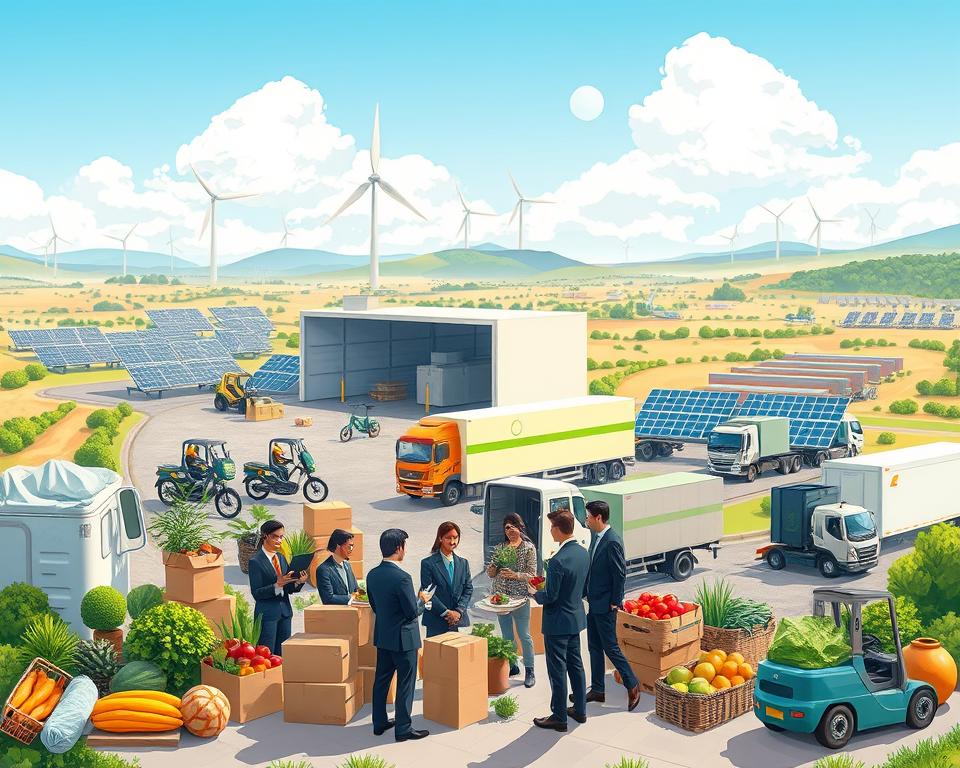
Clever adjustments to routes, sourcing, and modes cut emissions and cost without harming quality. These practices help you protect ingredients, reduce waste, and meet customer expectations.
Optimize routing and consolidate loads to cut fuel and emissions
Use route optimization tools and batch orders to lower miles and idling. Consolidating loads reduces trips and improves on‑time performance.
Source locally and shorten food miles without sacrificing freshness
Work with regional suppliers to keep ingredients fresher and support local economies. Balance local sourcing with seasonal availability to avoid higher carbon options.
Shift modes: rail and sea freight today, wind-assisted and sail where feasible
Rail and sea freight often beat road transport on efficiency for longer lanes. Blend modes to keep service levels steady while cutting carbon and energy use.
- Checklist: route optimization, load consolidation, local sourcing, modal shifts.
- Choose right-sized packaging and durable materials to protect goods and cut waste.
- Partner with companies and carriers that publish verifiable metrics so you can benchmark progress.
Eco‑Friendly Packaging That Performs in Delivery and Takeout
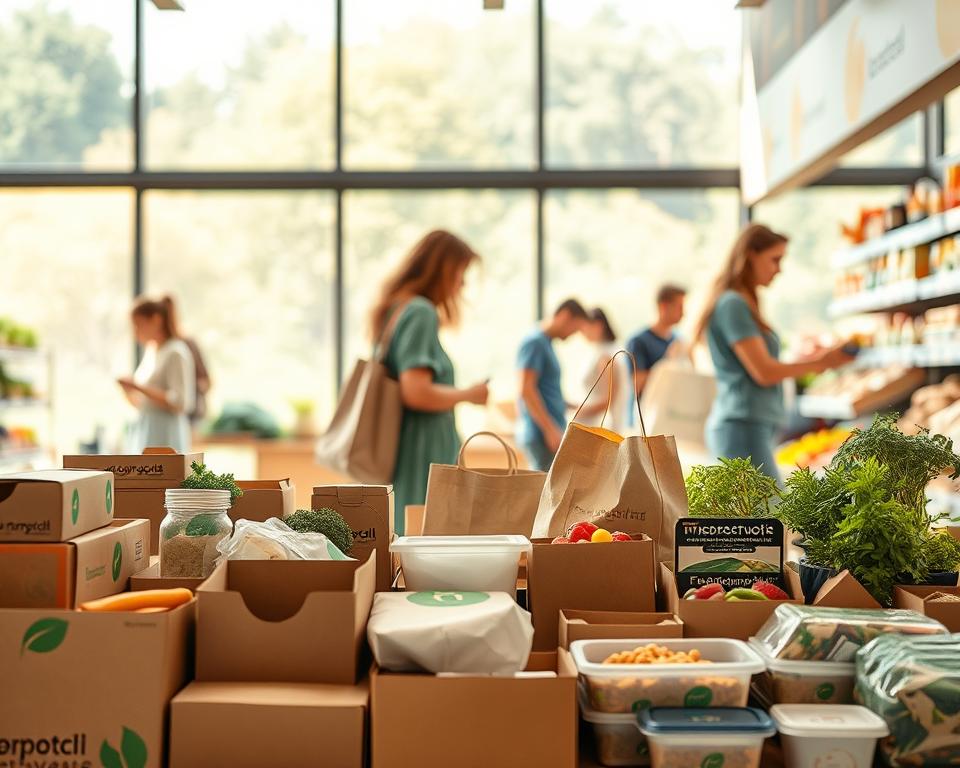
The right container can cut remakes, reduce waste, and make greener options easy for your guests. Focus on practical choices that protect temperature and texture while trimming excess material.
Compostable and plant‑based materials that reduce plastic waste
Evaluate compostable and plant-based materials that hold up to heat and moisture so your products arrive intact. Many plant-based options now match performance of single-use plastic without the same trash burden.
Reusable systems and returnable containers for durable protection
Reusable programs cut unit waste and save costs over time. Plan for cleaning, tracking, and reverse logistics so returns are simple for guests and staff.
Right-size portions and accessories to minimize waste in transit
Accurate portions and fewer filler items lower remakes and wasted product. Labeling, tamper seals, and order checks help you hit accuracy—82% of consumers say correct orders avoid waste, and 73% value accurate portions.
What consumers prefer now
- 54% prefer restaurants that remove excess packaging.
- 56% choose eco-friendly packaging without single-use plastic.
- 63% value plant-based or compostable options and may be willing to pay for visible improvements.
Tip: Track unit savings, diversion rates, and customer feedback to refine choices across menus and delivery modes.
Technology That Supercharges Sustainable Practices
When systems talk to each other, you can stop guessing and prevent costly spoilage before it happens. Advanced tools combine AI, IoT, and real‑time analytics so you can predict demand, optimize routes, and cut idle miles.
AI and IoT: smarter routing and real‑time alerts
AI sharpens demand forecasting and dispatch so you deliver faster with fewer miles and less waste. IoT sensors monitor temperature and vibration, and telematics send instant alerts when conditions drift.
Blockchain for traceability and trust
Traceability matters. Blockchain creates tamper‑proof records from farm to store. Major retailers use it to lower waste, speed recalls, and build trust through clear provenance.
Refrigeration advances: solar and phase‑change materials
New refrigeration units pair solar power with phase‑change materials to hold cold longer with less energy. That reduces reliance on traditional systems and cuts emissions from backup generators.
- Automate order flow to reduce errors and remakes that inflate emissions.
- Use dashboards to roll up fuel, energy, and emissions so you can target gains.
- Pilot tech by route or menu category, then scale what works across your system.
Want examples? See cross‑industry examples for proven practices and rollout tips: cross‑industry examples.
What Success Looks Like: Real‑World Examples and Momentum
Real projects now prove low‑carbon routes can run at scale without sacrificing speed or safety.
Schooner Apollonia sails the Hudson in New York, moving malted barley and dried goods with near‑zero emissions. Since 2020 it has completed 20 voyages and moved 200,000+ pounds of freight to 25 ports, then uses bike trailers for last‑mile delivery to keep impact low.
Sailing and wind‑assisted ocean transport
Companies like Grain de Sail and TOWT shorten transit times while cutting reliance on fossil fuels. Grain de Sail reaches Europe in about 22 days warehouse‑to‑warehouse, faster than many conventional lanes.
TOWT’s Anémos carries roughly 1,000 tons using ventilation and seawater temperature rather than full refrigeration, showing how design can lower carbon and handle delicate products.
Traceability and retail momentum
Walmart’s blockchain work proves traceability reduces waste and raises safety across long chains. That model helps companies benchmark impact and move faster on recalls or quality checks.
Restaurant wins and consumer signals
Operational changes in restaurants yield fast returns. Outback Steakhouse reports about 20% time savings after consolidating platforms, with fewer mistakes and less waste.
- Pilot mode shifts: test sail or rail for shelf‑stable products.
- Measure and trace: use blockchain or tracking to cut loss and speed response.
- Communicate value: share clear packaging choices so customers understand your environmental stewardship.
Conclusion
You can turn intent into steady progress by piloting changes and measuring what matters. Start small: test route tweaks, right-size orders, and try reusable or sustainable packaging on a single lane.
, These steps cut waste and emissions while keeping service reliable. Case studies—from sail freight to blockchain traceability—show real gains in accuracy and speed when you apply practical shipping practices and tech wisely.
Use clear metrics and share results with consumers and partners. For background on how impacts span supply chains, see the environmental impacts report.
Act now, benchmark progress, and scale what works to shrink your carbon footprint and lead your industry toward a cleaner future.